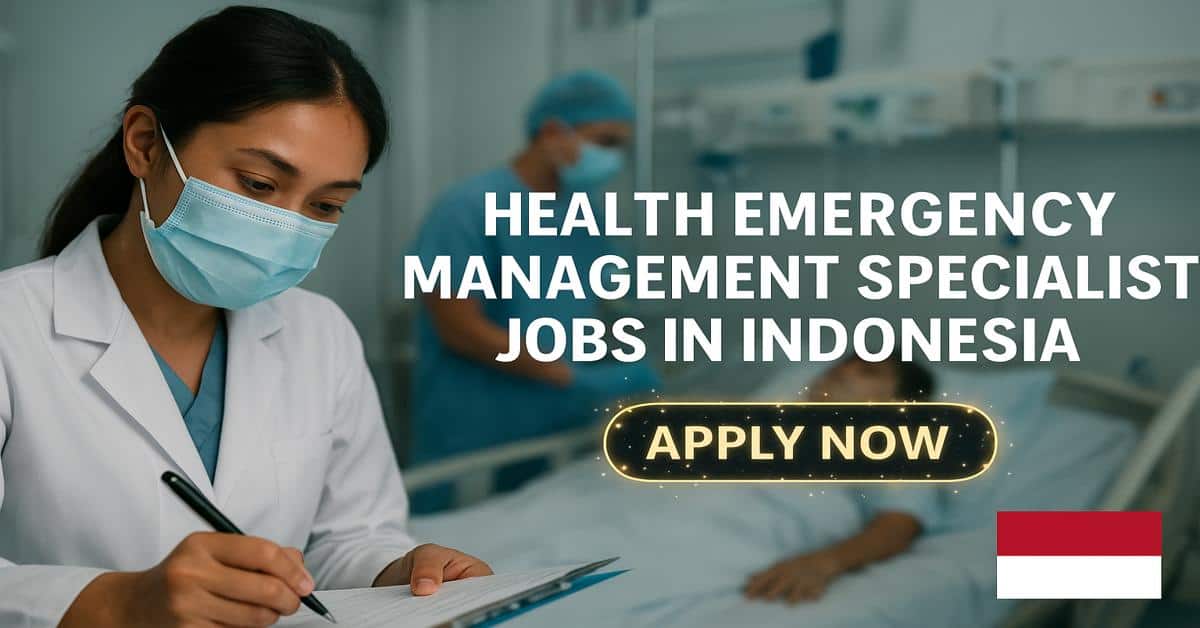
The Health Emergency Management Specialist Jobs in Indonesia in 2026 offer a rewarding salary of 80000 to 95000 USD per year about 1,338,000,000 – 1,590,000,000 IDR and require at least 6 years of progressive experience in emergency health management.
This full-time, on-site role allows you to make a real difference in communities facing health crises, working closely with local health teams, governments, and international partners. If you are passionate about helping others and thrive in dynamic, field-based environments, this position gives you the opportunity to lead life-saving initiatives and witness the impact of your work firsthand.
Details:
- Title: Health Emergency Management Specialist Jobs in Indonesia
- Country: Indonesia
- Type: Full time
- Category: Healthcare
- Employer: FHI 360
Job Overview:
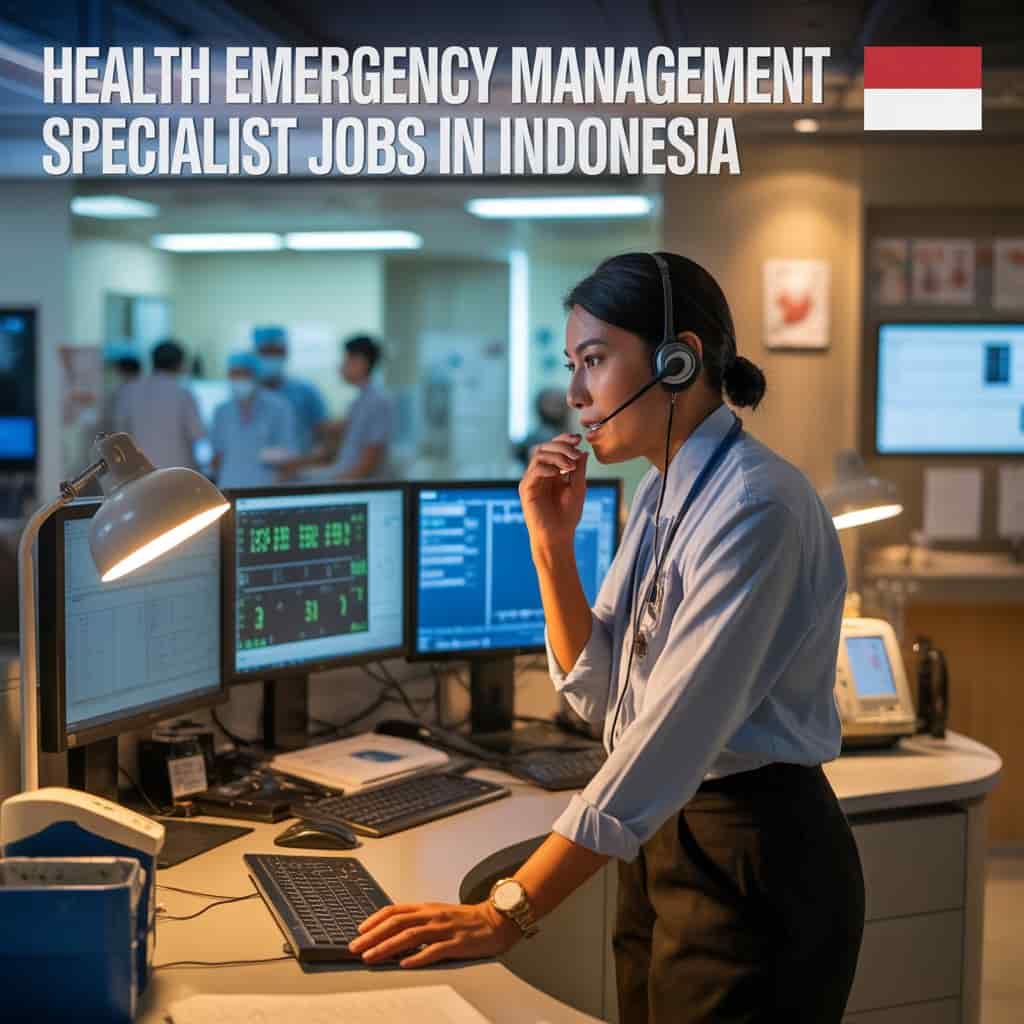
The Health Emergency Management Specialist (Field Staff) functions as an expert-level subject matter authority on emergency response within a major USG-funded Global Health Security (GHS) initiative. The role involves the development and implementation of policies and procedures, collaboration with stakeholders, and the assurance of the effective delivery of emergency response activities in field environments.
This individual offers technical leadership for emergency preparedness and response initiatives at the field level, oversees field personnel, and ensures that project activities conform to work plans and established international standards. Key partnerships encompass ministries of health, regional and district health authorities, local organizations, and USG missions.
Responsibilities of Health Emergency Management Specialist Jobs in Indonesia:
Technical Leadership:
- Offer specialized expertise in emergency health response and disaster management within field environments.
- Develop, execute, and oversee field-level emergency preparedness and response plans, ensuring compliance with national and international standards.
- Assist local health systems in enhancing their emergency management capabilities.
- Offer recommendations for incorporating emergency health response strategies into comprehensive Global Health Security initiatives.
- Serve as a technical advisor to stakeholders, including government agencies and local health partners.
Field Operations and Coordination:
- Oversee emergency response operations at field sites, ensuring adherence to project goals and donor stipulations.
- Establish and sustain relationships with local government agencies, health authorities, and community leaders to assure coordinated emergency response efforts.
- Carry out swift assessments and situation analyses in response to health emergencies, pinpointing gaps and formulating actionable strategies.
- Supervise the deployment and administration of resources, encompassing personnel, supplies, and funding, throughout field operations.
Staff Capacity Building and Supervision:
- Oversee and guide field personnel, ensuring their performance adheres to the objectives of the project.
- Design and execute on-site training initiatives to strengthen the capabilities of local health teams in emergency response.
- Identify training deficiencies and develop strategies to resolve them in coordination with national and regional stakeholders.
Monitoring, Reporting, and Quality Assurance:
- Develop and oversee monitoring frameworks for emergency response activities at the field level.
- Develop comprehensive reports on emergency responses, encompassing lessons learned and suggestions for enhancement.
- Ensure that all activities comply with project quality standards and are consistent with established best practices in health emergency management.
- Perform assessments of field operations, identifying potential hazards and corresponding mitigation strategies.
Stakeholder Engagement:
- Present the initiative at local and regional forums dedicated to health emergency preparedness and response.
- Coordinate with USAID missions, non-governmental organizations, and other partners to ensure that field activities are consistent with overarching GHS objectives.
- Facilitate cross-sectoral collaboration to support One Health strategies in managing zoonotic and other emergent health threats.
Applied Knowledge & Skills:
- Proven expertise in managing health emergencies within resource-limited environments.
- Comprehensive comprehension of the global health emergency environment, encompassing political, social, and cultural factors influencing field operations.
- Demonstrated capability to oversee intricate field projects and establish priorities amidst demanding circumstances.
- Exceptional diagnostic, analytical, and problem-solving abilities, with the capacity to adapt swiftly to dynamic situations.
- Proven interpersonal and negotiation skills to effectively engage with a variety of constituents, including local governments, donors, and community organizations.
Problem Solving & Impact:
- Anticipate and resolve challenges in emergency response efforts, encompassing logistics, security, and resource distribution.
- Provide practical solutions in high-pressure situations, assuring prompt and effective responses to health emergencies.
- Decisions directly influence the effectiveness of emergency response efforts and the organization’s standing with stakeholders.
Education and Certification of Health Emergency Management Specialist Jobs in Indonesia:
- A Master’s Degree or its international equivalent in Public Health, Emergency Management, Disaster Risk Reduction, or a related discipline.
- A Project Management (PM) certification is preferred.
- Certification in Emergency Management or Disaster Response is considered advantageous.
Experience:
- A minimum of six years of progressive experience in emergency health management, including substantial duration in field-based positions.
- Proven experience in directing emergency health interventions in developing nations, encompassing contagion management and disaster recovery efforts.
- Demonstrated capacity to collaborate effectively with government agencies and international organizations.
- Proven expertise in capacity development and training of healthcare personnel in emergency response management.
- Documented contributions to guidelines, toolkits, or publications pertaining to emergency health response efforts.
Check Also: Senior Management Support Assistant Jobs in Myanmar
Additional Requirements:
- Capability and readiness to undertake frequent travel to remote and demanding environments, often with limited prior notice.
- Excellent written and verbal communication abilities, including the capacity to generate comprehensive reports and presentations of superior quality.
- Proficiency in English is required; competence in additional languages pertinent to the XXXXX region is advantageous.
Equal opportunity Employer:
FHI 360 is an equal opportunity and affirmative action employer, committed to prohibiting discrimination against any individual employed or seeking employment based on race, color, religion, sex, sexual orientation, gender identity, national or ethnic origin, age, marital status, physical or mental disability, protected Veteran status, or any other characteristic safeguarded by applicable law.
Benefits of Health Emergency Management Specialist Jobs in Indonesia:
- Competitive Salary
Receive 80000 to 95000 USD per year, reflecting your expertise and field experience in emergency health management. - Professional Development
Access ongoing training and learning opportunities to enhance your skills and advance your career in global health. - Comprehensive Health Coverage
Enjoy medical, dental, and vision benefits to ensure your well-being while working in challenging environments. - Retirement and Savings Plans
Secure your future with retirement plans and savings options tailored to long-term financial stability. - Work-Life Balance
Benefit from policies that support personal time, flexible scheduling, and mental wellness initiatives. - Field Experience Opportunities
Gain hands-on experience in diverse locations, responding directly to health emergencies and building practical expertise. - Global Networking
Collaborate with international health organizations, government agencies, and local partners to expand your professional network. - Travel Opportunities
Frequent travel to field sites allows you to experience different regions while leading impactful health initiatives. - Recognition and Impact
Make a visible difference in communities while receiving acknowledgment for your contributions to global health security. - Inclusive Work Environment
Work in a diverse, equitable, and supportive workplace committed to professional respect and equal opportunity.
How to Apply for Health Emergency Management Specialist Jobs in Indonesia?
FHI 360 promotes the well-being and resilience of its personnel through a comprehensive benefits package, ongoing professional development opportunities, and policies and programs that encourage a healthy work-life balance. Become part of our international team to create a meaningful impact for others and for yourself.
Conclusion:
In summary, the Health Emergency Management Specialist (Field Staff) role combines technical expertise, leadership, and hands-on field work to manage health emergencies effectively. It offers the chance to make a tangible impact on communities while working with local and international partners. With competitive compensation and professional growth opportunities, it’s an ideal position for those passionate about saving lives and strengthening health systems.
Frequently Asked Questions:
-
What’s the impact of this role in Indonesia?
You help strengthen Indonesia’s ability to prevent, detect, and respond to health threats making a real difference in outbreak resilience and public health capacity.
-
What kind of local partnerships will I work with?
You’ll collaborate with the Indonesian Ministry of Health, regional health offices, community organizations, and possibly other government or non-government partners.
-
What are the main responsibilities of this specialist in Indonesia?
The role involves planning and leading health emergency responses, coordinating with Indonesia’s health authorities, conducting rapid assessments, and training local health teams.