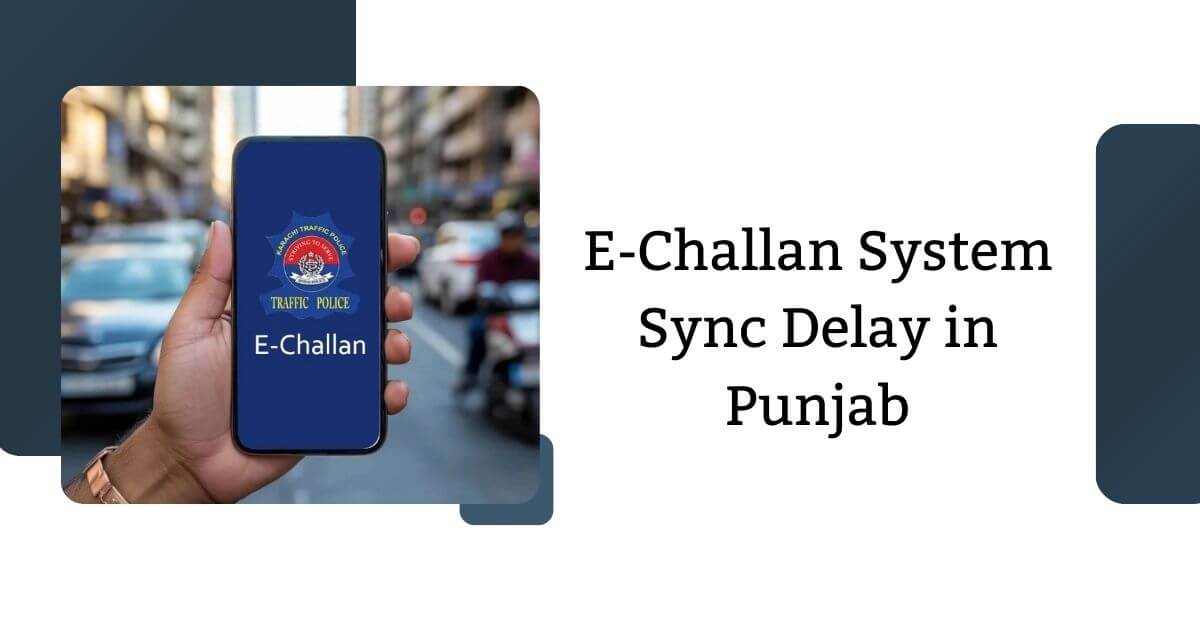
E-Challan System Sync Delay in Punjab highlights the behind-the-scenes work of IT, data, and traffic management teams who keep digital enforcement systems running smoothly. These government and contract-based roles offer fixed monthly salaries based on designation and experience, usually as full-time, office-based or field-supported jobs with limited remote options.
Entry-level staff assist with data updates and monitoring, while experienced professionals handle system maintenance and issue resolution. Beyond the technical tasks, this work matters because it supports transparency, reduces public frustration, and helps build trust in Punjab’s digital traffic management system.
What Is the E-Challan System in Punjab?
The Punjab e-Challan system is a fully digital traffic violation enforcement setup managed by:
- Punjab Safe Cities Authority (PSCA)
- Punjab Traffic Police
- Integrated payment and court systems
This system replaces paper challans and brings transparency, speed, and accuracy to traffic law enforcement.
Traffic violations are identified using:
- AI-based Safe City cameras
- Automatic Number Plate Recognition (ANPR)
- Speed and red-light monitoring cameras
- Manual challans issued through handheld traffic police devices
Once a violation is captured, an e-Challan is automatically generated and digitally linked with:
- Vehicle registration number
- CNIC (in some cases)
- Date, time, and exact location of the violation
- Fine amount and violation category
This data stays on record until the challan is paid and fully cleared across all systems.
What Is an E-Challan System Sync Delay?
An e-Challan system sync delay happens when information does not update at the same time across all connected platforms.
This delay can affect:
- Visibility of a newly issued challan
- Payment status after fine submission
- Traffic police or court record updates
- Removal of cleared challans from public portals
Although the system is digital, it relies on multiple backend systems and verification layers, which means real-time updates are not always possible.
How the Punjab E-Challan System Works (Step-by-Step)
Understanding the workflow makes it easier to see where delays occur:
Violation Detection
Traffic cameras or on-ground officers detect a violation.
Data Upload to Central Server
Images or video evidence is uploaded to PSCA servers.
Verification & Approval
Human review ensures accuracy and prevents false challans.
Challan Generation
A digital challan is officially created and logged.
Public Portal Update
The challan becomes visible on online platforms.
Payment Processing
Fines are paid via bank, ATM, PSID, JazzCash, or Easypaisa.
Payment Confirmation Sync
Payment confirmation is sent to the central system.
Court & Police Record Update
Traffic police and court databases update the challan status.
A delay at any single step can slow down the entire process.
Main Reasons for E-Challan System Sync Delay in Punjab
1. Multiple Databases Working Separately
The e-Challan system connects several independent platforms, including:
- PSCA camera systems
- Traffic Police enforcement databases
- Banking and payment gateways
- NADRA and vehicle registration records
- Traffic court systems
Since these platforms don’t sync instantly, delays are common.
2. Manual Verification of Violations
Even AI-detected violations go through human checks to avoid issues like:
- Incorrect number plate readings
- Wrong vehicle categories
- Duplicate or false violations
This review improves accuracy but can slow updates.
3. Banking & Payment Gateway Delays
Payments made through:
- Banks
- ATMs
- Mobile wallets
- PSID systems
are often processed in batches. Weekends, public holidays, or maintenance can delay updates by 24 to 72 hours.
4. Traffic Court System Integration Lag
If a challan is sent to traffic court:
- Court systems operate on separate servers
- Updates usually happen during official working hours
- Clearance can take several working days
This causes visible delays in record updates.
5. High Volume of Violations
During periods such as:
- Fog season
- Traffic crackdowns
- Expansion of AI camera coverage
thousands of challans are generated daily, increasing backlog and processing time.
6. CNIC or Vehicle Record Mismatch
Delays can occur if:
- CNIC details are outdated
- Vehicle ownership has changed
- Registration data is incomplete
The system pauses updates until records are corrected.
How Long Does E-Challan Sync Usually Take in Punjab?
Typical update timelines in 2026 are:
- New challan appearance: 6–24 hours
- Payment status update: 24–72 hours
- Court record clearance: 3–7 working days
- Repeated or disputed challans: Longer, depending on the case
Delays beyond these periods may require follow-up.
Does a Paid E-Challan Still Appear Due to Sync Delay?
Yes. Due to E-Challan system sync delay, a paid challan may:
- Appear as unpaid online
- Show pending in court records
- Remain visible in challan history
This usually means the payment confirmation has not synced yet not that the payment failed.
What to Do If Your E-Challan Record Updates Late
1. Keep Payment Proof
Always save:
- Bank receipt
- Mobile payment screenshot
- PSID transaction ID
2. Wait at Least 72 Hours
Most sync issues resolve automatically within three working days.
3. Check Official Portals Only
Avoid unofficial or third-party websites.
4. Contact Traffic Police or PSCA
If the delay continues, report with:
- Vehicle number
- CNIC
- Challan number
- Payment proof
5. Visit Traffic Facilitation Center (If Required)
For court-related or repeated challans, physical verification may be necessary.
Can Sync Delay Cause Legal or Travel Problems?
In rare situations, yes:
- Vehicle transfer may be temporarily blocked
- Multiple challans can trigger impound warnings
- Court summons may still appear active
- Driving record may briefly show violations
However, valid proof of payment protects you legally.
Is the Punjab Government Fixing E-Challan Sync Delays?
Yes. In 2026, authorities are actively working on:
- Unified digital databases
- Faster bank-to-PSCA integration
- Real-time payment APIs
- Automated court clearance updates
- Improved AI accuracy and verification speed
These improvements are expected to significantly reduce e-Challan system sync delays across Punjab.
Common Myths About E-Challan System Sync Delay
Myths About the Delay in E-Challan System Sync
- “My challan wasn’t paid” → Often not true
- “I will get fined again” → Fines for duplicates are lowered.
- “The court case will last forever” → After sync, cleared
- “System is broken” → Usually just takes longer
Conclusion:
An e-Challan system sync delay can be frustrating, but it’s usually a normal part of how the system works. Payments and records take time to update across traffic police, banks, and court databases. As long as you’ve paid your challan and kept proof, there’s no need to panic. Most issues resolve automatically within a few days without any penalty or legal trouble.
Frequently Asked Questions:
-
How long does an e-Challan system sync delay usually take?
Most updates are complete within 24 to 72 hours, depending on payment method and system load.
-
Is my payment still safe if the challan shows as unpaid?
Yes. If you have a receipt or transaction ID, your payment is recorded and will reflect after syncing.
-
Do I need to visit the traffic office for sync delays?
Not usually. Only visit if the delay continues beyond several working days or the challan is court-related.